
Mecklenburg Weekly Arrest Log
Mecklenburg County runs no weekly blotter. The sheriff's office posts no 72-hour or seven-day roundup either. The MCSO Arrest Inquiry lets you search by arrest date. Repeating that search day by day is the closest thing to a weekly feed. The official arrest-search interface is where every multi-day check starts.
The public tool reaches back three years. A search that is too broad can return more than 500 records. There is no date-range export. Search by name instead. Then test likely arrest dates. One caution: a hit in the inquiry marks a booking event, not current custody. Whether someone sits in the Mecklenburg County Detention Center is a separate question. Inmate Inquiry answers it.
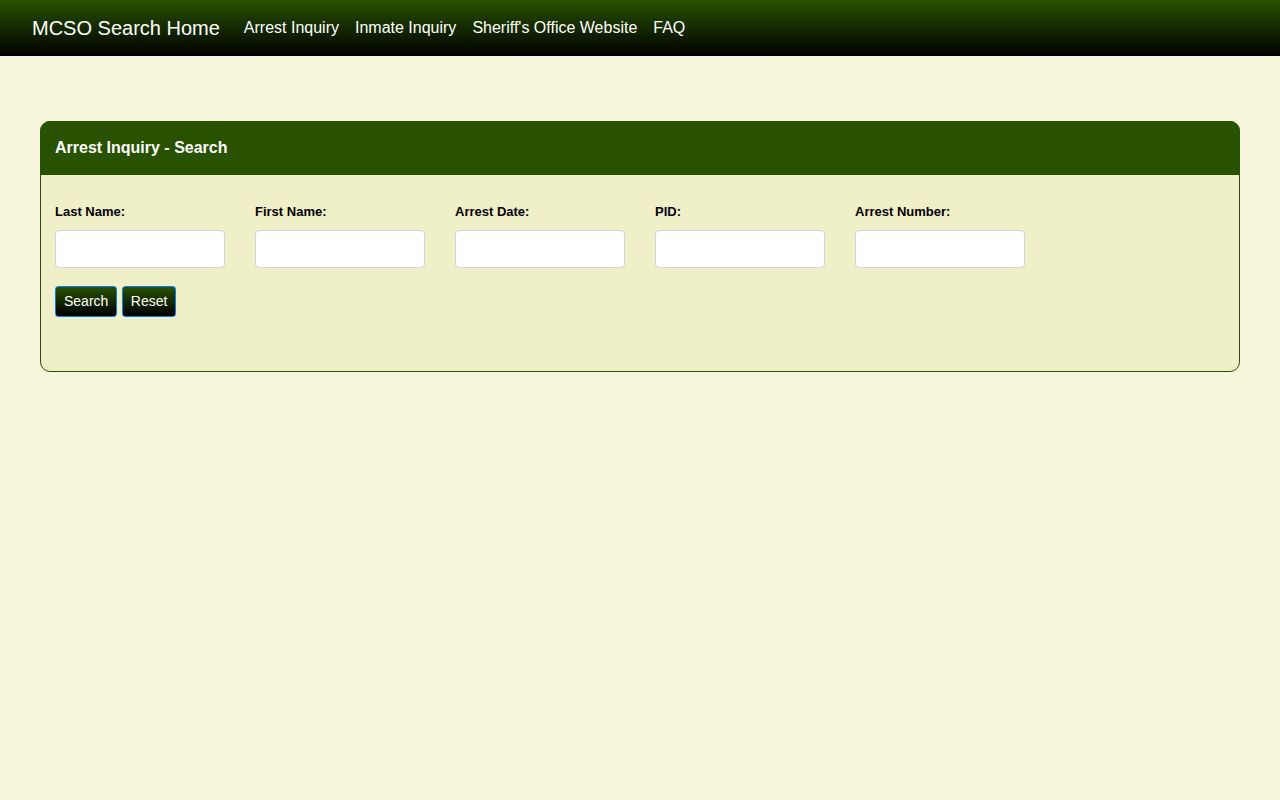
The captured form supports repeated date searches without displaying a gallery of booked people.
Read Mecklenburg Arrest Dates
Dates come first in any blotter review. Settle identity and custody after that. Work backward one day at a time from the end of the period you want. The pace is slower than a ready-made feed, but it fits the official tool's actual design and keeps a selective news story from standing in for the full arrest log.
- Open MCSO Arrest Inquiry and enter a complete first and last name, or use an arrest number if known.
- Search the most likely arrest date, then repeat the same focused search for each earlier date in the period.
- Open each matching detail and compare PID, date of birth, arrest number, arresting agency, charges, bond, and custody fields.
- Use Inmate Inquiry for current detention and the North Carolina eCourts Portal for hearings or disposition.
- When the record falls outside the public online window, request it from MCSO Public Information or the proper court custodian.
Never fold separate arrest numbers into one event. One person can be booked more than once. Two people can share a name too. A PID marks the person in the MCSO system, an arrest number marks a single event, and the court case number is its own thing.
Mecklenburg Arrest Log Fields
The official detail shows more than a news blotter. Charge codes split into felony, misdemeanor, traffic, or infraction. Bond coding may read secured, unsecured, cash, custody, judicial, or no bond. Disposition codes can say active, bonded, expired, or inactive. Keep in mind that every code describes jail operations, never the court's final judgment.
| Log field | How to read it |
|---|---|
| Name, aliases, date of birth | Identity facts that should be compared before accepting a match. |
| PID | MCSO’s person identifier. |
| Arrest number and date | The specific booking event and the date searched. |
| Arresting agency | CMPD, HPD, MPD, MCSO, or another agency that originated the arrest. |
| Charges | Charges recorded at booking, subject to later court change. |
| Bond and custody status | Current system data that can change after judicial review or release. |
| Photograph | A person-specific booking image when public and displayed, never a complete gallery. |
Outcomes live in the court file. The official Portal or Clerk record tracks arraignment, hearing activity, pleas, and disposition. Sheriff codes stop at jail operations. Disposition there means the court's final or current resolution of a case, not a status label inside the sheriff system.
Mecklenburg Arrest Trends Lag
The Mecklenburg Criminal Justice Services Arrest Dashboard answers a wider question than any roster can. It tracks aggregate arrest trends from January 1, 2013 forward, with a one-day lag. Break the counts down by race, gender, and age. No names appear there. Neither live custody nor booking photographs show up. The official CJS dashboard page is the county's channel for the big picture.
A dashboard count is not a live arrest log. It sets a stretch of weeks in historical context. A named-person check still belongs in MCSO Arrest Inquiry. And despite the "real-time" label, the numbers are aggregate, drawn from a different system with a different purpose and update rhythm.
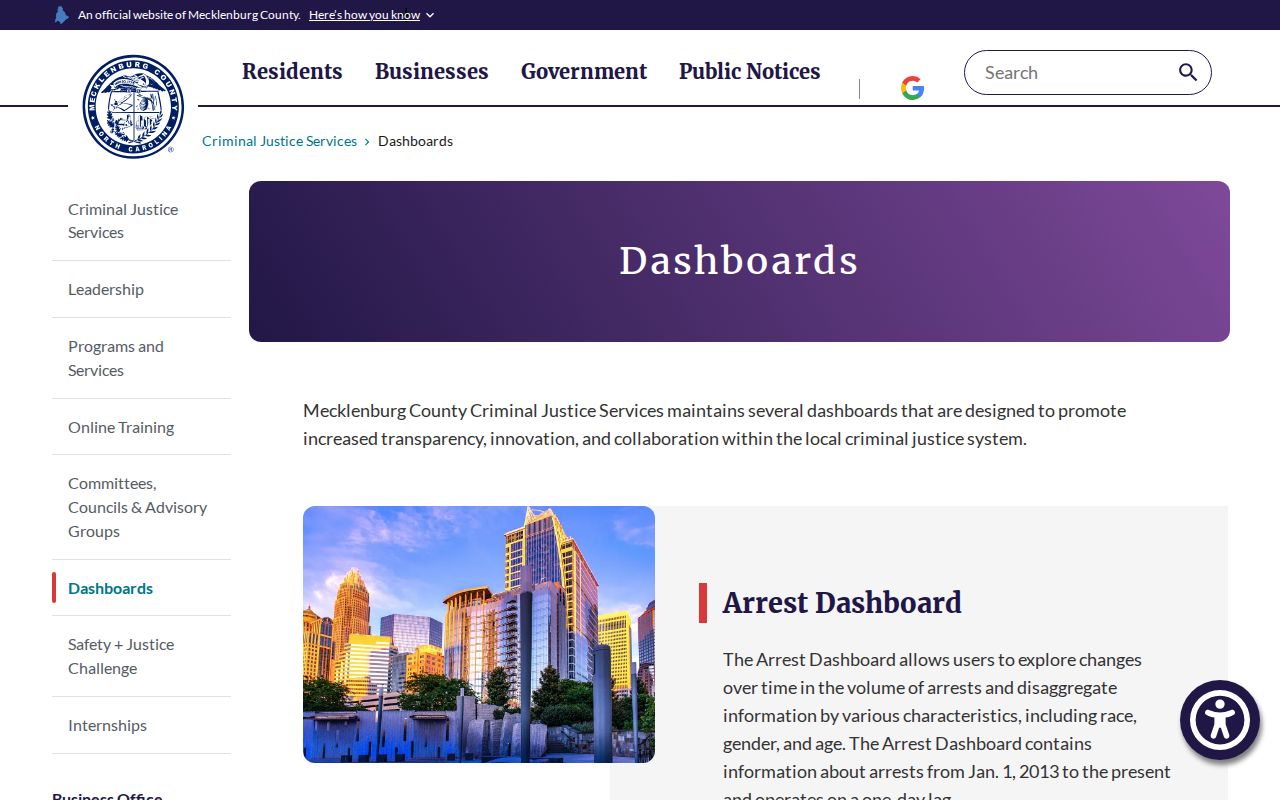
Trend context is all this view offers. It cannot confirm a single booking or release. Note: use the dashboard for counts and patterns, and the sheriff search for an individual booking record.
Mecklenburg Arrest News Is Selective
Local news explains arrests; it is not a county blotter. The Charlotte Observer's Crime & Courts section, WBTV Crime, and WSOC-TV run event-driven stories. Matthews posts selected police news too. Editors pick what counts as newsworthy. Silence in those feeds never means no booking happened.
Photographs in a story may be file images, scene shots, or video stills rather than booking photos. A date can mark publication, the arrest, warrant service, or a court event. Check every detail against MCSO and the court record. Early police releases often come before a charge is reduced or dropped. The WBTV crime page shows the pattern.
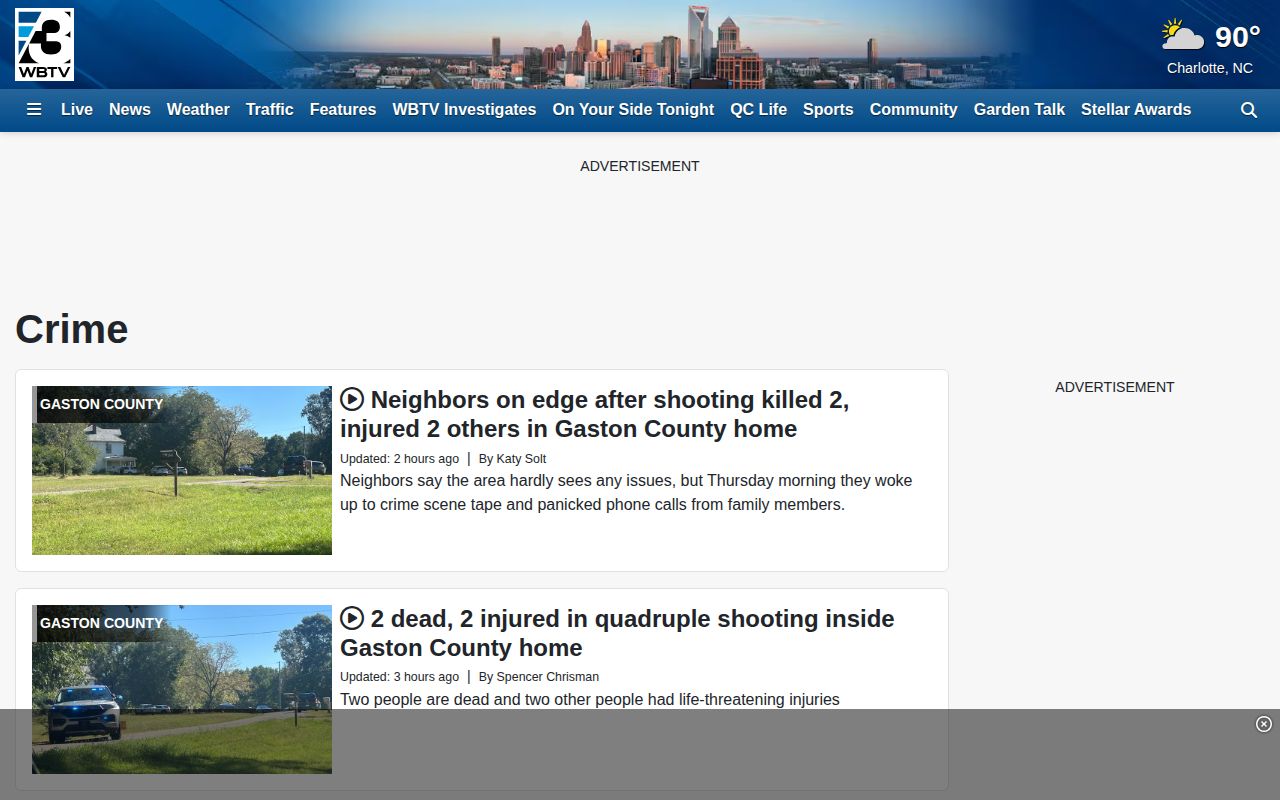
A newsroom view offers context, never a complete Mecklenburg County arrest log. Unofficial booking sites keep Mecklenburg sections too. Their pages can be incomplete, delayed, or plain wrong, whether they post long historical runs or claim last-30-days coverage. None of them replaces MCSO as the official source.
Older Mecklenburg Arrest Records
A record vanishing from the online inquiry is not the end of the story. The three-year display limit only governs what the public sees. Behind it sits a retention schedule with teeth of its own. North Carolina's sheriff records schedule lets DWI tracking records be destroyed. That can happen two years after the arrest. Arrest reports can go five years after the arrest. But that only applies when they sit outside a case file. Material tied to a case follows the case-history schedule instead. The sheriff lists no separate public retention period for booking photos.
Want an older entry? Submit the MCSO Public Information form with the person's name and an approximate date. Include a PID or arrest number if you have one. Name the exact record sought. Approval takes three to five business days. MCSO can also limit a request under law, the form warns. No fixed booking-photo fee appears anywhere on it. Even when the sheriff's public entry is gone, the Clerk of Court may still hold the court record.
The State Archives rounds out the paper trail. Staff there can search historical county material by record type, person, year, and county. No digitized Mecklenburg booking-photo collection exists, though. Plenty of transferred county records sit unindexed by name. So ask who actually holds the record before assuming an old image survives anywhere.
- Online window
- The period visible in the public MCSO interface, currently described as three years.
- Retention
- How long the responsible agency must keep a record under its approved schedule.
- Archive
- Older government material transferred for preservation, often without a person-name index.
- Court disposition
- The later case result that may differ from the original booking charge.
Note: An entry leaving the online inquiry does not prove the underlying report or photograph was destroyed.
Public Record Search
Sponsored Results